

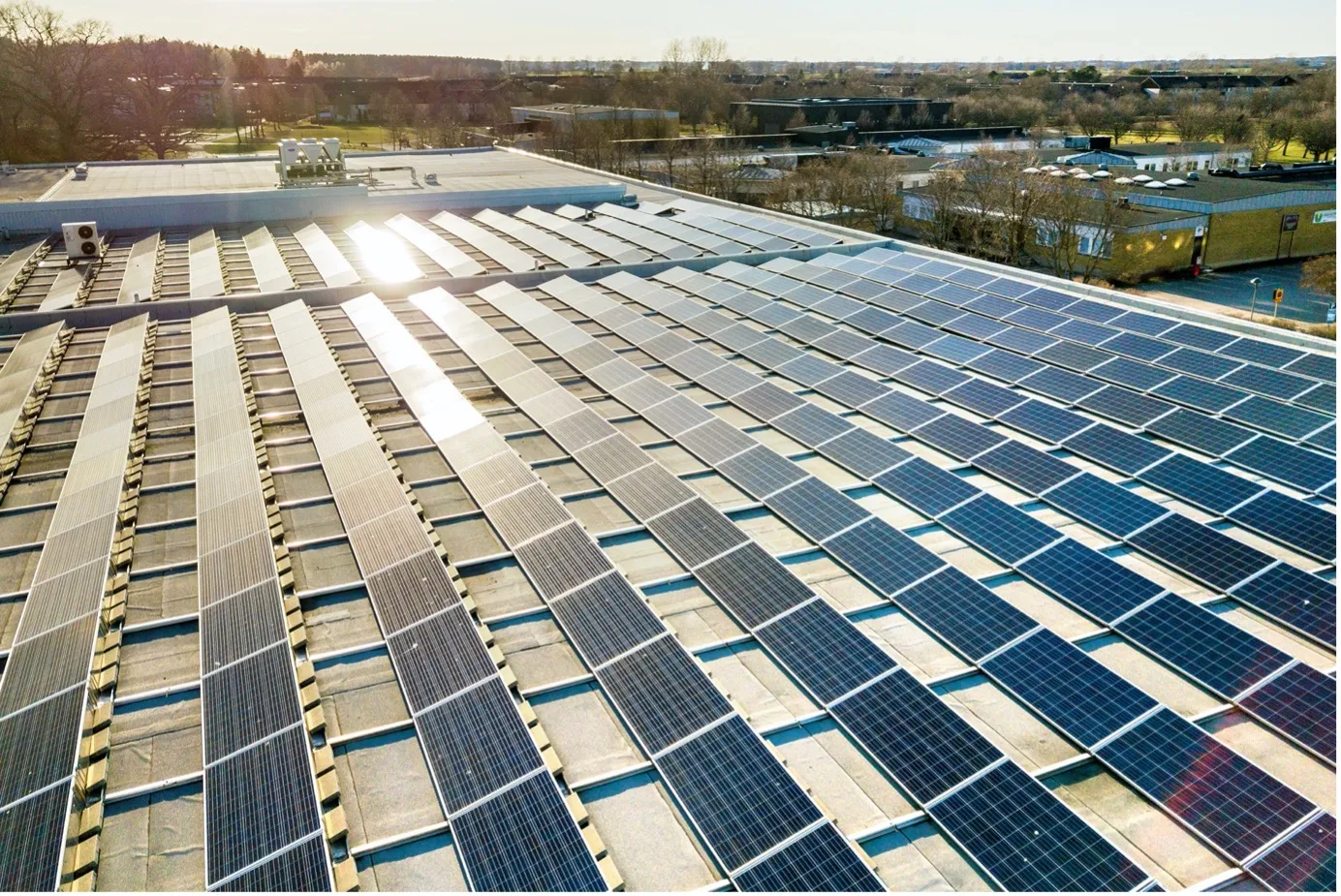
In today’s business environment, sustainability and cost-efficiency are no longer optional — they’re competitive advantages. That’s why commercial solar panel services are rapidly becoming a go-to solution for companies that want to lower energy bills, reduce carbon emissions, and build energy resilience. In this article, we’ll explore the driving forces behind this trend, the benefits, challenges, and best practices for choosing the provider of commercial solar panel services.
Table of Contents
1. Rising Pressures on Businesses
2. Key Benefits of Commercial Solar Panel Services
3. How Commercial Solar Panel Services Work
4. Financial Models & Incentives
5. Technical and Operational Considerations
6. Choosing the Right Commercial Solar Panel Services Provider
7. Case Study Snapshot
8. Future Trends in Commercial Solar Panel Services
9. Conclusion
1. Rising Pressures on Businesses
Several external factors are pushing companies toward clean energy, and these pressures are accelerating adoption of commercial solar panel services:
Energy cost volatility: Utility prices can swing wildly due to fuel markets, regulation, or supply constraints, making budgeting difficult.
Sustainability mandates: Stakeholders, customers, and governments increasingly demand greener operations and lower greenhouse gas emissions.
Corporate reputation & ESG goals: Many firms include environmental, social, and governance (ESG) metrics in their public reporting; deploying solar supports those goals.
Regulatory incentives & penalties: Subsidies, tax credits, feed-in tariffs, or carbon pricing schemes tilt the economics in favor of renewable investments.
Technological maturity: Solar technology and energy storage have become more efficient and affordable, making commercial deployments viable.
Because of all these drivers, more companies are turning to commercial solar panel services as a strategic lever, not just a side project.
2. Key Benefits of Commercial Solar Panel Services
Deploying commercial solar panel services brings a host of advantages that make it an attractive proposition for many businesses:
• Reduced energy costs
• Rapid payback periods
• Stability and predictability in energy supply
• Improved corporate sustainability credentials
• Lower exposure to utility rate hikes
• Enhanced energy independence
• Potential to generate revenue via surplus energy sales or incentives
• Long-term asset value and resilience
For instance, some providers report that businesses generate electricity via solar at rates far below what they otherwise pay the utility — meaning real savings from day one. (On the Ecovision site, they claim customers generate at ~5p/kWh vs paying ~20p/kWh in the UK)
Ecovision Asset Management
Moreover, a well-managed system with monitoring, maintenance, and warranty support can reliably function for 25 years or more, offering decades of value.
Ecovision Asset Management
3. How Commercial Solar Panel Services Work
To understand what “commercial solar panel services” really means in practice, let’s break down the typical workflow:
3.1 Initial Assessment & Site Analysis
Evaluating roof or ground-mount potential (structure, orientation, shading)
Assessing current and projected electricity consumption
Estimating irradiance and solar yield
3.2 System Design & Engineering
Determining module layout, inverter sizing, wiring, mounting hardware
Structural assessments, permitting, grid connection feasibility
3.3 Financing Strategy
Upfront capital models (CAPEX)
Leasing or Power Purchase Agreement (PPA) models
Subsidy or grant applications
3.4 Installation & Commissioning
Mounting panels, wiring, inverters, safety systems
Grid interconnection and testing
3.5 Monitoring, Maintenance & Performance Optimization
Real-time monitoring systems
Scheduled cleaning and inspections
Troubleshooting, repairs, replacing faulty components
3.6 Warranty & Aftercare
Manufacturer warranties on panels, inverters, etc.
Service warranties for workmanship
Performance guarantees (if included in the service contract)
All of the above are encompassed by many full-service providers of commercial solar panel services.
4. Financial Models & Incentives
One reason more companies are adopting commercial solar panel services is the diversity of financial models and incentives that lower barriers to entry.
4.1 CAPEX Model (Outright Purchase)
You own the system, benefit fully from generation, and qualify for tax incentives or depreciation (depending on jurisdiction).
4.2 Leasing / PPA Model
The provider installs and owns the system; you pay for the electricity generated (often below local utility rates). This reduces upfront capital burden and transfers certain risks.
4.3 Hybrid / Shared Ownership
You invest in part of the system while the provider contributes or finances the rest.
4.4 Grants, Subsidies & Tax Credits
Many jurisdictions support solar deployment through grants, feed-in tariffs, accelerated depreciation, or tax credits that enhance return on investment.
On Ecovision’s commercial offering, they mention that when CAPEX is not available, they provide alternatives such as hire purchase, asset finance, or PPA structures.
Ecovision Asset Management
These flexible financial options make commercial solar panel services accessible to many businesses, even those lacking capital for full upfront investment.
5. Technical and Operational Considerations
While the advantages are strong, deploying commercial solar isn’t without challenges. Key considerations include:
Roof structural integrity & load capacity
Shading from nearby structures or trees
Orientation and tilt optimization
String sizing, inverter selection, and balancing
Grid interconnection and approval delays
Maintenance costs, inverter replacement, and system degradation
Monitoring and diagnostics to catch underperformance
Warranty compliance and service contracts
A high-quality commercial solar panel services provider should address all these issues through rigorous design, monitoring, and service.
6. Choosing the Right Commercial Solar Panel Services Provider
Selecting the right partner is critical. Here are essential criteria:
• Track record & references: Ask for completed commercial projects and client testimonials.
• Technical expertise & design capabilities
• Financing options & flexibility
• Warranty & service guarantees
• Monitoring & maintenance offerings
• Transparency in performance projections
• Quality of components & brand neutrality
• Regulatory & permitting capability
For example, Ecovision emphasizes that they use high-quality components sourced independently, and they handle full-scale monitoring and maintenance of systems.
Ecovision Asset Management
A provider that offers a full suite of commercial solar panel services, from design to maintenance, is often preferable to piecing together multiple vendors.
7. Case Study Snapshot
While full case studies vary, here’s a simplified hypothetical example inspired by real providers:
Client: Industrial warehouse with 5,000 m² rooftop
Energy consumption: 1,200,000 kWh/year
Solution: 1.2 MW rooftop system
Model: PPA model, provider owns system
Results:
Energy generation covers ~80% of usage
Electricity cost ~40% lower than utility
Payback or breakeven within contract term
Carbon emissions reduction: ~500 tons annually
These kinds of results are becoming more common in commercial solar, thanks to more mature commercial solar panel services and better financing structures.
8. Future Trends in Commercial Solar Panel Services
Looking ahead, some emerging trends will shape this space:
Energy storage integration (batteries) as part of the service
Smart energy management / demand response coupling
AI monitoring and predictive maintenance
Microgrids and on-site generation + consumption synergy
Corporate green hydrogen or other renewable tie-ins
Increasing use of modular and scalable systems
Blockchain or peer-to-peer energy trading in commercial complexes
As providers evolve, commercial solar panel services will become more holistic, blending solar, storage, analytics, and even flexible energy markets.
9. Conclusion
More companies are choosing commercial solar panel services not just for green credentials, but because it makes strong financial and operational sense. The confluence of improved technology, flexible financing, regulatory support, and rising energy costs is lowering the barriers.
To succeed, businesses must partner with a provider capable of handling design, installation, monitoring, and maintenance — ensuring performance over decades. With the right approach, commercial solar can become a core component of an efficient, sustainable, and resilient energy strategy.
If you like, I can tailor this article further (add statistics for your region, local incentives, images, or a call-to-action). Do you want me to adapt it for Czechia / Europe or polish it further?
