

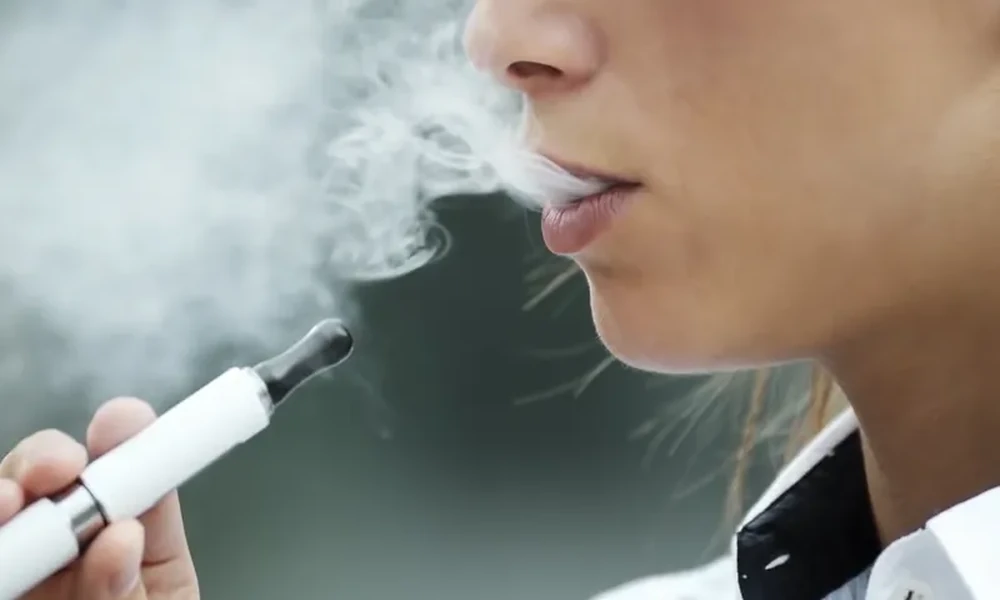
Where does airflow begin?
Airflow begins at intake vents machined into the base or collar of the device, where ambient air enters the moment inhalation drops pressure inside the airway. From there, a defined channel guides that stream across the atomiser chamber, into the chimney, and out through the mouthpiece as vapour-laden breath.
Every stage along that route gets engineered deliberately. Publications ranking each best thcp vape contender routinely test draw feel before anything else, since airflow character reaches a user faster than any spec sheet detail ever could. Vent placement decides how directly incoming air strikes the heated zone, angled inlets sweeping across the coil while bottom ports rise straight through it. Channel width sets baseline resistance long before adjustment rings enter the picture. Dense concentrate complicates the journey further downstream, because aerosol from thick formulations carries more suspended mass than distillate vapour, demanding a slightly stronger current to stay airborne through the full passage without settling against walls midway.
Why does pressure drive flow?
Pressure differential drives the entire system; no pump exists anywhere inside these devices. Inhalation lowers pressure at the mouthpiece, the atmosphere pushes inward through the vents to equalise, and vapour rides that moving column upward.
Sensor activation depends upon the same physics. Draw-activated units place a small diaphragm beside the intake path, and the pressure dip flexes it enough to close a switch, waking the battery. Weak seals sabotage everything here. Leaks around the tank base bleed pressure sideways, softening both the draw and the sensor response, which is why gasket condition shapes airflow quality as much as vent design does. Steady, moderate inhalation preserves the differential best, while sharp pulls collapse it briefly without pulling more vapour.
Turbulence inside chambers
Air crossing the atomiser chamber does more than transport vapour; it actively strips fresh aerosol away from the coil surface. Smooth laminar flow would slide past, leaving boundary vapour clinging in place, so designers introduce mild turbulence deliberately.
- Stepped chamber walls trip the stream into gentle swirls around the heating zone.
- Offset inlet angles spin incoming air rather than firing it straight through.
- Ridged chimney bases mix cooler intake against warm aerosol evenly.
Balanced turbulence lifts vapour density noticeably. Excessive churn cools the coil instead, thinning output.
Exit path shaping
Chimney and mouthpiece finish the journey together, cooling and focusing vapour across the final stretch. Several design details govern how comfortably that last stage lands.
- Longer central bores shed extra heat against their walls, trading slight density for smoother arrival.
- Mouthpiece taper compresses flow into a focused stream matched to natural draw pace.
- Sloped internal ledges route condensation back toward the reservoir instead of pooling near the exit.
- Clean runoff channels keep later draws tasting identical to the earliest ones.
Airflow works as a single continuous circuit, vents admitting air, pressure moving it, turbulence loading it with vapour, and shaped exits delivering it comfortably. Devices praised for effortless draws almost always hide careful decisions at every point along that path, invisible until compared against hardware that skipped them.
