

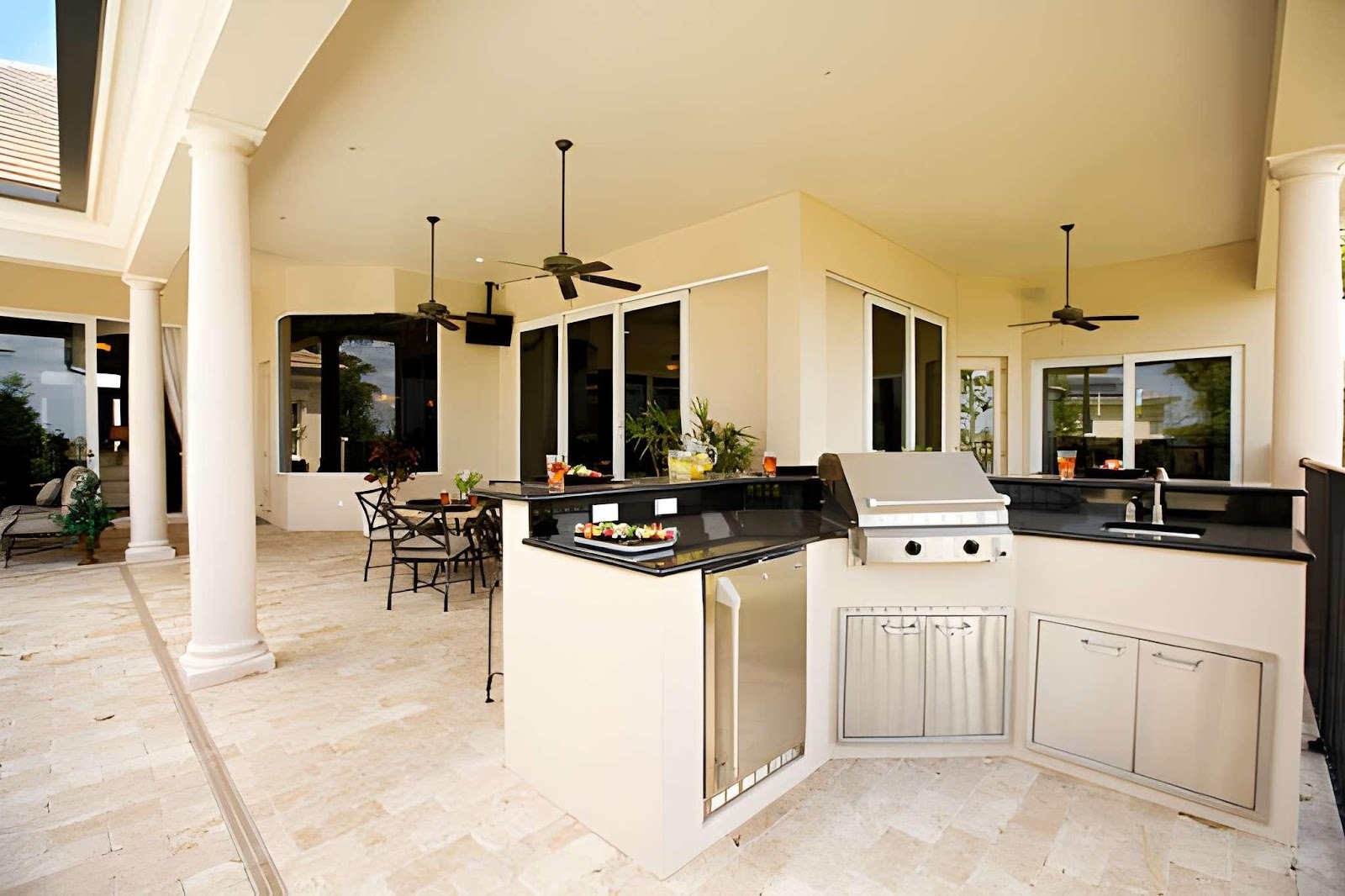
At the beginning, choosing outdoor kitchen cabinets can feel a bit like picking décor. You notice the colour first. Then the finish. The shape. It all seems visual, almost cosmetic. But very quickly, reality steps in. These cabinets will live outside day and night, through rain showers, harsh sun, drifting dust, and chilly evenings.
If they are not built for that, it shows fast. Doors warp. Surfaces fade. Hinges complain. And suddenly, cooking outdoors feels like an effort. That is when you realise these cabinets were never just background pieces. They quietly control how smooth, convenient, and enjoyable your entire outdoor cooking experience will be.
Looking at setups like Whistler Cirencester outdoor kitchens helps you understand what well-planned cabinetry actually looks like in a real garden. A quick browse through examples on BBQs2u shows how cabinets, prep zones, and cooking areas are arranged with intention. You start seeing cabinets as part of the workflow, not just storage boxes lined up against a wall.
Start with the Material
It is very tempting to pick cabinets based on how they look. Try not to.
Outdoor conditions are tough, and the wrong material shows its weakness quickly.
- Powder-coated aluminium resists rust and stays lightweight
- Marine-grade stainless steel handles moisture and strength
- Waterproof polymer boards don’t swell, crack, or rot
- Sealed joints and raised legs stop water damage at the base
When the material is right, you stop worrying every time it rains.
Match the Cabinets to How You Cook
This part gets overlooked. A lot.
Think about your habits, not the catalogue picture.
- Do you use trays, tools, and utensils often? You will want deep drawers.
- Do you prep food outdoors? Counter space with storage underneath matters.
- Do you host guests regularly? Easy-access storage avoids constant back-and-forth.
- Do you store gas bottles? Ventilated cabinets are essential.
Cabinets should reflect your routine. Not force you to adapt to them.
Inside the Cabinet Matters Too
What is inside changes how the kitchen feels to use every day.
- Pull-out drawers instead of deep, hard-to-reach spaces
- Adjustable shelves for awkward equipment
- Soft-close fittings that don’t struggle in humidity
- Practical sections for tools, trays, and supplies
These small details remove tiny annoyances that add up quickly.
Consider How Exposed Your Patio Is
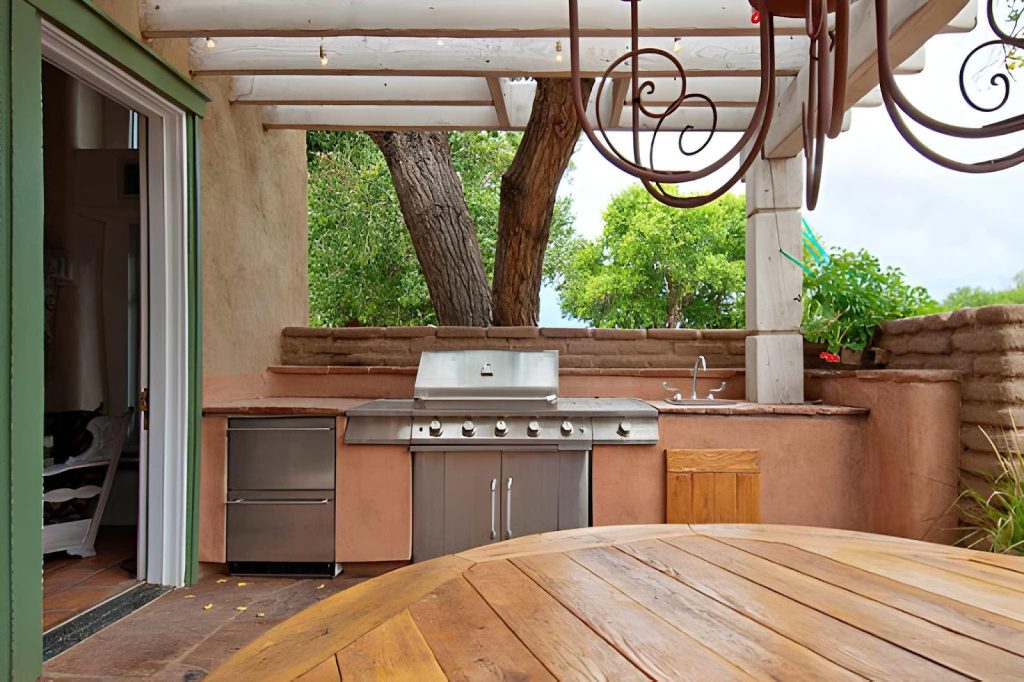
Some patios sit under pergolas. Others face direct sun and heavy rain. Be honest about your space.
If it is exposed, fully weatherproof cabinetry is not optional. If it is sheltered, you have a little flexibility, but durability still matters. Weather finds weak spots eventually.
Seeing How Layout and Cabinets Work Together
The Oaksey Kitchen layout is a good reference for how cabinets can be arranged to support a smooth cooking flow. Storage sits exactly where it is needed, without crowding movement. Prep areas feel natural. Nothing feels squeezed in as an afterthought.
When cabinets are chosen and placed like this, they stop feeling like furniture. They become part of how the kitchen works. And that is when outdoor cooking starts to feel easy, organised, and genuinely enjoyable.
